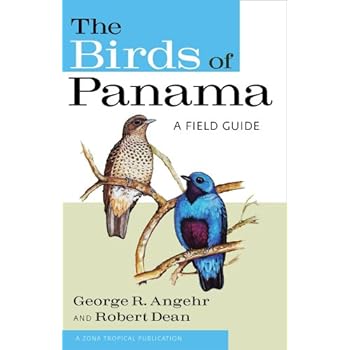
The Birds of Panama: A Field Guide
Category: Livres,Livres pour enfants,Jeux, arts et création
The Birds of Panama: A Field Guide Details
The isthmus of Panama, where North and South America meet, hosts more bird species than all of North America. More accessible than ever to birdwatchers and other ecotourists, the country has become a premier neotropical birding and nature tourism destination in recent years. The Birds of Panama will be an essential tool for the new generation of birders traveling in search of Panama's spectacular avifauna. This user-friendly, portable, and affordable identification guide features: -large color illustrations of more than 900 species;-the first range maps published to show the distribution of Panama's birds;-concise text that describes field marks for identification, as well as habitat, behavior, and vocalizations;-range maps and species accounts face illustration pages for quick, easy reference;-the inclusion of North American migrants and seabirds, as well as female and juvenile plumage variations;-an up-to-date species list for the country that reflects recent additions, taxonomic splits, and other changes in classification.Panama's unique geography, small size, and varied habitats make it possible to see a vast diversity of birds within a short time. Its western and central areas harbor representatives of species found in Central America; species characteristic of South America may be found in the east. In the winter, birds from northern climes are commonly found in Panama as migrants. This is the one field guide the novice or experienced birder needs to identify birds in the field in Panama's diverse habitats.


Reviews
"The Birds of Panama" a été un compagnon de voyage agréable lors de mon récent voyage au Panama. C'est un guide complet et correct sur cette région du monde riche d'une avifaune encore plus diversifiée que son voisin mieux connu, le Costa Rica. Ce livre commence par une introduction succincte sur les espaces protégés et les milieux naturels du pays. Puis viennent les planches, classiques d'un guide d'identification, faisant face à des textes courts et brefs et des cartes précises et soignées. Les dessins sont corrects mais les planches un peu vides, manquant d'abondance d'autant plus que les juvéniles et les femelles ne sont montrées vraiment qu'en cas de dimorphisme extrême. Mais mis à part ce détail peu handicapant finalement le guide reste très correct quand même.